2026 Jetour T1: New Powertrain Options, Price and Specifications
News

2026 Jetour T1: New Powertrain Options, Price and Specifications

Release Date : 2026-11-19
Views :
Share:

1. 2026 Jetour T1: An Expanded Product Lineup and Wider Range of Powertrain Options

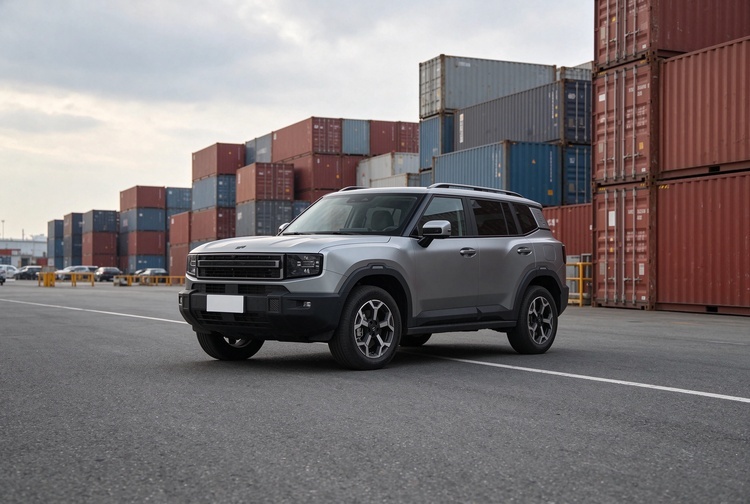
The 2026 Jetour T1 is a compact SUV that combines boxy exterior styling with a range of powertrain configurations. Its product lineup covers turbocharged gasoline models and selected plug-in hybrid derivatives, allowing buyers to consider different driving requirements and energy conditions.
Unlike SUVs designed primarily for urban commuting, the Jetour T1 also emphasizes light outdoor usability. Its relatively high ground clearance, available all-wheel-drive system, and five-seat layout make it suitable for everyday family travel as well as occasional driving on gravel roads and other unpaved surfaces. The exact capabilities depend on the selected model and drivetrain configuration.
In terms of exterior design, the Jetour T1 retains the distinctive boxy styling of the T series. Its broad body profile, three-dimensional front grille, relatively high stance, and roof rails create an outdoor-oriented appearance. Compared with conventional urban SUVs, this design places greater emphasis on practicality while retaining the comfort and maneuverability required for everyday driving.

2. Engine, Transmission, and Powertrain Technology

The powertrain is an important part of the Jetour T1 specifications. The combination of engine and transmission affects not only acceleration but also highway cruising, low-speed driving, and power delivery under challenging road conditions.
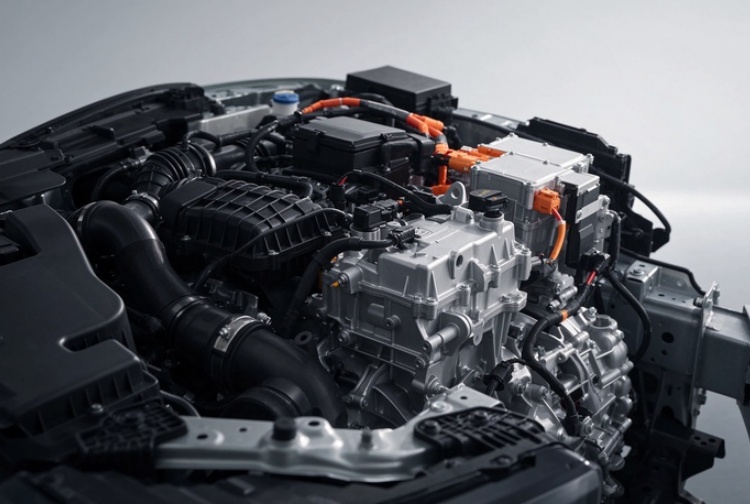
The gasoline lineup mainly offers turbocharged engines with different displacements to meet various driving requirements. The 1.5T version uses direct fuel injection and delivers a maximum power output of 135 kW and peak torque of 290 N·m. It is paired with a 7-speed wet dual-clutch transmission (7DCT). This combination provides a balance between low- and mid-speed response for urban commuting and power delivery for highway driving.
The 2.0T version provides greater power reserves. Some models deliver a maximum output of 187 kW and peak torque of 390 N·m, paired with an 8-speed automatic transmission (8AT). Compared with the smaller-displacement version, it offers more power for fully loaded driving, sustained uphill climbs, and highway overtaking. Selected models are also equipped with an on-demand four-wheel-drive system to improve traction on different road surfaces.
The plug-in hybrid models combine an internal combustion engine with an electric drive system. A dedicated hybrid transmission mechanism manages power delivery under different operating conditions. Some PHEV derivatives in the T1 lineup, such as the T1 Plus C-DM, are equipped with a 26.6 kWh traction battery and offer a CLTC-rated pure electric range of up to 150 km. Since engine specifications, battery capacity, and powertrain configurations vary between models, buyers should refer to the official technical specifications for the relevant market and vehicle version.
Comparison Item 1.5T Gasoline Version 2.0T Gasoline Version Plug-in Hybrid Version
Powertrain 1.5T turbocharged engine 2.0T turbocharged engine Combined engine and electric drive system
Reference Power Output 135 kW / 290 N·m 187 kW / 390 N·m Varies by specific derivative
Transmission 7DCT 8AT Dedicated hybrid transmission mechanism
Drivetrain Depends on market version On-demand AWD available on selected models Depends on market version
Energy Supply Gasoline Gasoline Gasoline and external electricity
Main Use Cases Daily commuting and family travel Fully loaded driving, highway travel, and sustained uphill driving Daily commuting with charging access and long-distance travel
The differences between these powertrain options extend beyond their rated output. The 1.5T gasoline version is oriented toward everyday commuting and general family use, while the 2.0T version provides greater power reserves for highway overtaking, uphill driving, and heavier loads. PHEV derivatives offer the possibility of electric driving for shorter journeys, provided that charging facilities are available.
However, the suitability of each version depends on more than engine output or battery capacity. Driving habits, road conditions, fuel availability, and local maintenance capabilities should also be considered when comparing the different configurations.

3. Jetour T1 Price and Market Competitiveness

The Jetour T1 price is an important factor for consumers evaluating this SUV. Since import duties, transportation costs, vehicle configurations, and sales policies vary between markets, there is no single international retail price that applies to every region.
In terms of market positioning, the Jetour T1 is a mid-priced competitor in the compact SUV segment. Based on published vehicle pricing information, its indicative price range is approximately USD 17,000–24,000. This range is intended to provide a general reference for its market position and does not represent the actual transaction price in every export market.
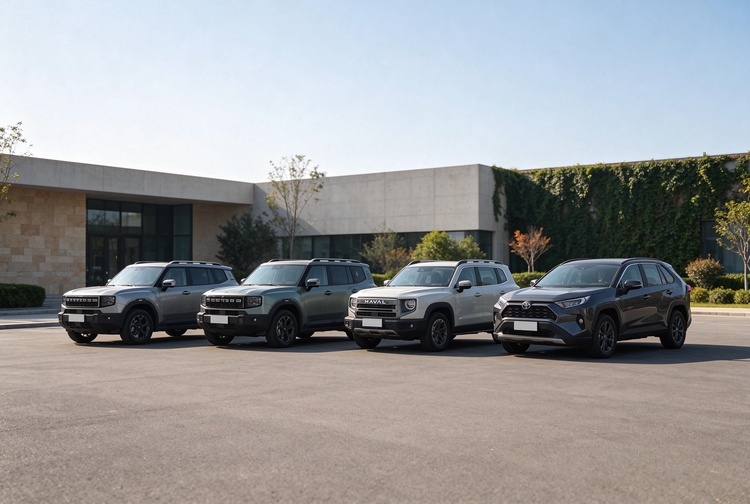
Within its segment, the Jetour T1 can be compared with the Jetour T2, Haval Dargo, and Toyota RAV4. However, these models do not share exactly the same product focus.
The Jetour T2 places greater emphasis on rugged SUV styling and outdoor use, while the T1 has a more restrained design that seeks to balance urban commuting, family travel, and light off-road activities. Although the two models share similar brand design elements, they differ in body specifications, powertrain configurations, and market positioning.
The Haval Dargo also emphasizes an outdoor-oriented appearance. Its boxy body design and powertrain options make it a competitor in this segment. The Jetour T1's distinguishing feature is its availability with different powertrain options, giving buyers more flexibility.
The Toyota RAV4 has a more established position as a mainstream urban SUV, with advantages in powertrain variety, market coverage, and brand recognition. The T1 differentiates itself through its more distinctive boxy styling and outdoor-inspired design.
Model Market Positioning Main Features Key Differences from the Jetour T1
Jetour T1 SUV balancing urban and light outdoor use Boxy design, multiple powertrain options, suitable for daily commuting and outdoor trips Balances urban practicality with outdoor styling
Jetour T2 SUV with a more rugged design More pronounced off-road styling and a stronger outdoor orientation The T1 has a more restrained design and places greater emphasis on everyday use
Haval Dargo Urban SUV with outdoor-inspired styling Boxy appearance, suitable for city driving and some unpaved roads Similar positioning in some respects; differences depend on engine and configuration
Toyota RAV4 Mainstream urban compact SUV Mature product lineup, broad powertrain options, and extensive market coverage The RAV4 focuses more on conventional urban SUV use, while the T1 has more distinctive styling

For buyers who need a vehicle for both urban commuting and light outdoor activities, the T1's boxy design and multiple powertrain options may be appealing. Those who prioritize rugged styling and off-road capability can also compare the T2 and Dargo. Buyers looking for a well-established urban SUV lineup may consider the RAV4. For a meaningful comparison, vehicles should be matched by market and configuration level.

4. Body Dimensions, Chassis Design, and Ground Clearance

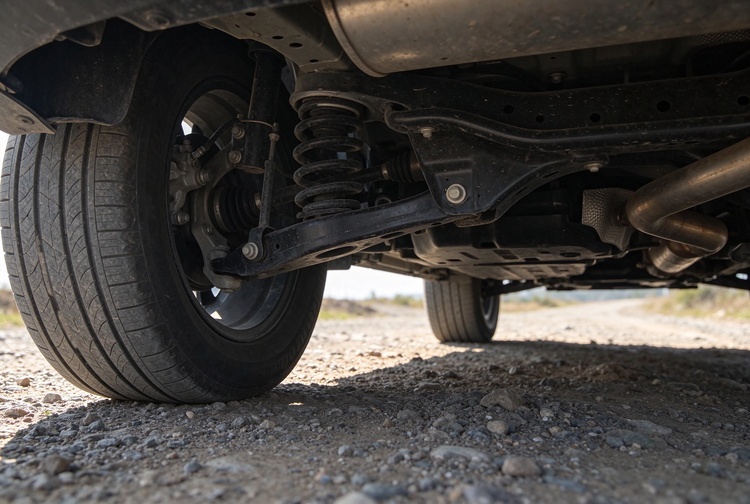
The Jetour T1 uses a unibody construction, with MacPherson independent front suspension and multi-link independent rear suspension. This combination is designed to balance everyday driving stability, body control, and ride comfort. Compared with vehicles focused primarily on off-road capability, this chassis layout places greater emphasis on road performance while retaining some capability for light outdoor use.
According to specifications published for gasoline versions in selected international markets, the main body dimensions of the Jetour T1 are as follows:
 
Specification Reference Value
Length 4,705 mm
Width 1,967 mm
Height 1,843 mm
Wheelbase 2,800 mm
Minimum Ground Clearance 190 mm
Seating Capacity 5
Luggage Compartment Capacity 574 L
These figures refer to specific vehicle versions. Specifications may vary by market and powertrain, so the official technical documentation for the individual vehicle should be used for confirmation.
In terms of interior space, the 2,800 mm wheelbase provides a good foundation for front- and rear-seat passenger comfort. The five-seat layout meets the needs of everyday family travel, while the 574 L luggage compartment provides space for suitcases, daily essentials, and outdoor equipment. This makes the vehicle suitable for users who need a balance between passenger capacity and cargo space.
Regarding off-road capability, selected four-wheel-drive versions feature an on-demand AWD system that adjusts power distribution between the front and rear axles according to available traction. This can provide additional grip on slippery and loose surfaces. The reference ground clearance of approximately 190 mm is sufficient for ordinary potholes and light unpaved roads. However, the T1 is not a dedicated off-road vehicle. Its actual ability to negotiate obstacles also depends on approach and departure angles, tire specifications, and underbody protection.
5. Intelligent Cockpit and Safety Features
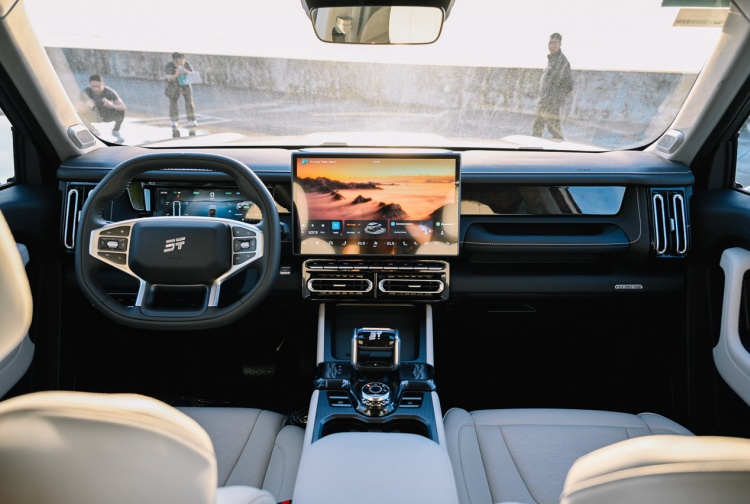
The Jetour T1's cabin combines a digital instrument cluster with a central infotainment display. Vehicle information, navigation, entertainment, and driving settings are integrated into the display interface. Depending on the configuration, additional features may include intelligent voice interaction, smartphone connectivity, and a multifunction steering wheel, allowing drivers to access commonly used functions more conveniently.
In terms of driver assistance, selected models may offer features such as a 360-degree panoramic camera, transparent chassis view, automatic emergency braking, lane departure warning, and blind-spot monitoring. These systems use cameras, radar, and related control software to help drivers identify their surroundings. The availability of specific functions depends on the vehicle configuration.
For users who frequently drive long distances, seat support, air conditioning performance, cabin noise insulation, and driving visibility are also important considerations. Comfort features and interior space can significantly affect the experience during extended journeys.

6. Practical Performance Under Different Road Conditions

The Jetour T1's performance varies across different road conditions, with powertrain selection, drivetrain configuration, and road surface playing important roles in its overall usability.

Urban Commuting and Family Travel

The Jetour T1's five-seat layout and independent suspension make it suitable for regular family use and daily commuting. Its relatively compact SUV proportions also provide a balance between interior space and everyday maneuverability. For drivers who frequently travel short distances, a PHEV derivative may reduce gasoline consumption when regular charging is available. However, buyers should consider the availability of charging facilities and the battery specifications of the exact version before making a decision.

Highway and Long-Distance Driving

For highway and long-distance travel, power reserves, cruising stability, and cabin comfort become more important. The 2.0T version provides greater power output, offering additional capacity for fully loaded driving, highway overtaking, and sustained uphill climbs. For long-distance use, buyers should also consider fuel tank capacity, tire specifications, and braking system performance to ensure suitability for extended driving.

Rural Roads and Light Unpaved Surfaces

On gravel roads, uneven surfaces, and ordinary muddy roads, higher ground clearance and an AWD system can help maintain traction and reduce wheelspin. However, on deep mud, loose sand, or roads with larger obstacles, the vehicle remains limited by tire grip, suspension travel, and chassis design. The Jetour T1 is better suited to ordinary unpaved roads and light outdoor activities rather than extreme off-road conditions.

Different Climate and Energy Conditions

In high-temperature environments, air conditioning performance and the operating condition of the engine cooling system can affect everyday usability. In colder regions, buyers should pay attention to cold-start performance, winter tires, and the low-temperature performance of the traction battery. For PHEV models, the availability of local charging infrastructure and maintenance resources for the battery and hybrid system should also be considered.

7. Powertrain Selection and Purchasing Recommendations for the 2026 Jetour T1

Selecting the right Jetour T1 powertrain requires consideration of local fuel availability, charging infrastructure, driving distance, and maintenance resources.
The 1.5T gasoline version may be suitable for buyers who mainly use the vehicle for urban commuting and regular family travel. The 2.0T version is worth considering for users who frequently drive on highways, travel with heavier loads, or need additional power reserves for uphill roads.
PHEV derivatives may offer greater flexibility for users who have convenient access to charging facilities and regularly cover shorter daily distances. However, buyers should evaluate battery capacity, electric range, charging compatibility, and local hybrid-system maintenance support before choosing this option.
For commercial procurement, the decision should also account for the availability of spare parts, expected operating costs, and the import requirements of the destination market. These factors can have a greater impact on long-term ownership costs than the initial purchase price alone.

8. Key Factors to Consider When Importing the Jetour T1

1. Import Certification and Local Regulations

Before exporting the Jetour T1, buyers should confirm that the vehicle meets the import, emissions, safety, and registration requirements of the destination market. This includes checking the necessary certification documents and technical information.
Particular attention should be paid to whether gasoline and PHEV versions are subject to the same import standards. Buyers should also verify that the vehicle's production year, emissions rating, and certification documents meet local requirements to avoid customs clearance or registration problems after arrival.

2. Parts Availability and After-Sales Support

Before purchasing, importers should identify reliable supply channels for key components, including the engine, transmission, braking system, and electronic modules. They should also confirm the ordering lead times for commonly used parts and check whether components are interchangeable between different powertrain versions.
Warranty coverage, claim procedures, and maintenance responsibilities should be clearly established. Buyers should also ensure that local repair facilities have the technical capability to service the relevant engine, transmission, and hybrid systems.

3. Delivery Schedule and Export Documentation

Vehicle delivery times depend on stock availability, production schedules, inspection procedures, and transportation arrangements. Before placing a bulk order, buyers should confirm the vehicle quantity, exact configurations, production years, VIN availability date, and estimated delivery schedule.
In addition, documents such as the commercial invoice, packing list, bill of lading, vehicle certificates, and other documents required by the destination market should be checked in advance. In markets requiring import permits or pre-approval certification, document reviews should be completed before shipment to reduce the risk of customs delays and additional storage costs.

9. Limitations and Usage Considerations of the Jetour T1

The intelligent cockpit may offer different functions across export versions of the Jetour T1. These differences can include system languages, navigation maps, smartphone connectivity, and online services. Some functions depend on an internet connection, so availability may be affected by local network conditions, service coverage, and software versions.
For OTA (Over-the-Air) updates, buyers should confirm whether the export version supports remote software updates and whether local network conditions and authorized service channels can provide ongoing software maintenance. If certain online services are unavailable in the destination market, this may affect navigation updates, intelligent functions, and future system maintenance.
In addition, the actual availability of driver assistance features may be affected by road markings, map data, and local traffic conditions. Importers should therefore verify the specific driver assistance configuration, its operating requirements, and its compatibility with local road environments.

10. Frequently Asked Questions (FAQ)

Q1: What powertrain options are available for the 2026 Jetour T1?
The Jetour T1 lineup includes 1.5T and 2.0T turbocharged gasoline versions, as well as PHEV derivatives available in selected markets. Depending on the engine specifications, gasoline versions are paired with either a 7DCT or an 8AT transmission, while PHEV models use a dedicated hybrid transmission mechanism. The exact versions available depend on local market planning.
Q2: What is the approximate Jetour T1 price?
Based on published vehicle pricing information, the indicative price range is approximately USD 17,000–24,000. Actual export quotations depend on vehicle configuration, transportation method, destination taxes and duties, and market availability. Buyers should request a specific quotation for the most accurate pricing.
Q3: What is the pure electric range of the Jetour T1 PHEV?
Some PHEV derivatives, such as the T1 Plus C-DM, are equipped with a 26.6 kWh traction battery and offer a CLTC-rated pure electric range of up to 150 km. This figure does not apply to every Jetour T1 PHEV version. Actual range is also affected by vehicle configuration, ambient temperature, and driving conditions.
Q4: Which chassis specifications are worth noting in the Jetour T1 specifications?
Selected models in international markets have a wheelbase of 2,800 mm and a reference minimum ground clearance of 190 mm. They use MacPherson independent front suspension and multi-link independent rear suspension. The unibody structure places greater emphasis on road stability while providing sufficient capability for ordinary light unpaved roads.
Q5: Is the Jetour T1 suitable for unpaved roads?
Models equipped with four-wheel drive can handle some gravel roads, muddy surfaces, and other light unpaved conditions. However, the T1 uses a unibody structure and is not a dedicated rugged off-road vehicle. It should not be treated as an extreme off-road model.
Q6: What are the differences between the Jetour T1 and Jetour T2?
Both models feature boxy SUV styling, but the T1 is positioned for a balance between urban and outdoor use, while the T2 has a more pronounced rugged off-road appearance and stronger outdoor-oriented character. Buyers can compare their body designs, space requirements, and specific configurations to determine which model better suits their needs.

Conclusion

The 2026 Jetour T1 has established a clear market position through its different powertrain options, five-seat SUV layout, and chassis design intended to balance road driving with light outdoor use. Its gasoline and plug-in hybrid versions suit different energy conditions and driving requirements, while the availability of four-wheel drive on selected models provides additional capability on some unpaved roads.
For buyers interested in the 2026 Jetour T1, Jetour T1 price, Jetour T1 specifications, and Jetour T1 PHEV, it is important to verify the exact engine specifications, drivetrain, battery capacity, and safety equipment of the individual vehicle. The climate, road conditions, and after-sales service resources in the destination market should also be considered before making a purchase decision.
If you are interested in the Jetour T1, whether for personal use or commercial procurement, feel free to contact our sales team for more information.
Please let us know your destination country or port, preferred powertrain version (1.5T, 2.0T, or PHEV), and estimated purchase quantity. Based on your requirements, we can provide the relevant vehicle specifications, stock availability, delivery information, and FOB quotation.
 
Online Message
The company is dedicated to making strong combination, utilizing the advantages of each shareholder .
* Email
Name
* WhatsApp
Country
Intended Model Quote
Consult
Subscribe to our latest dynamic events
Leam More >>
Service
Subscribe to our latest dynamic events
Leam More >>
Help
Subscribe to our latest dynamic events
Leam More >>