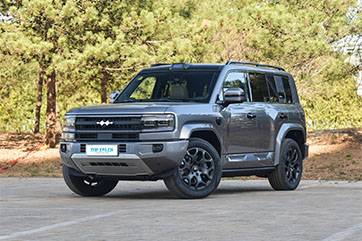
1. 2026 BYD Leopard 8: Technical Upgrades to a Large Plug-in Hybrid Off-road SUV
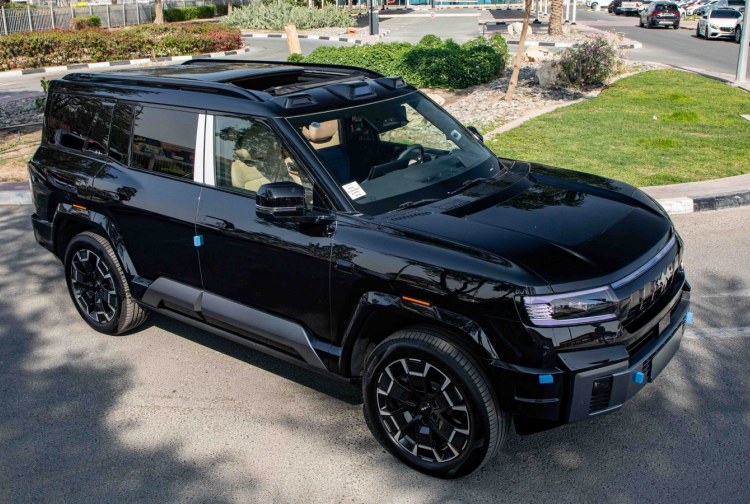
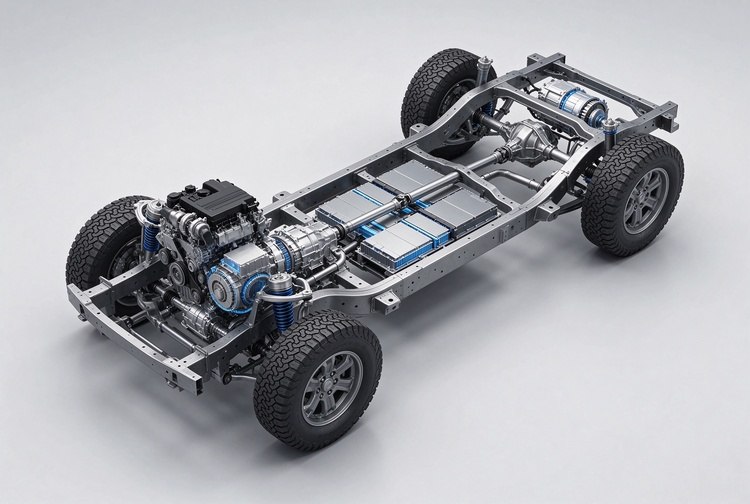
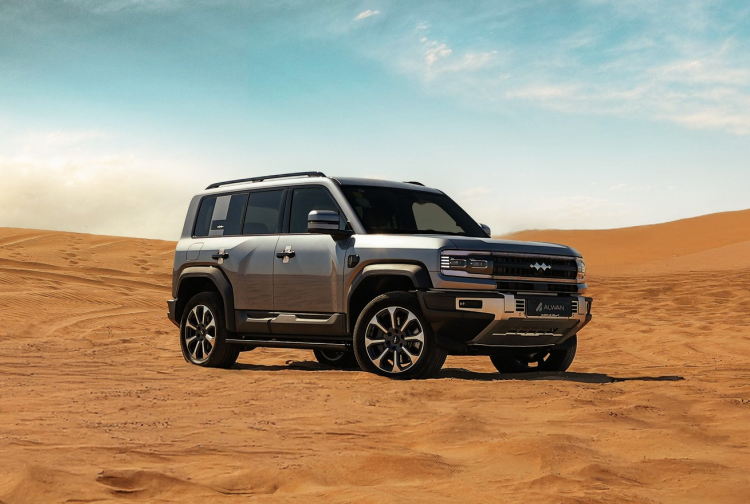
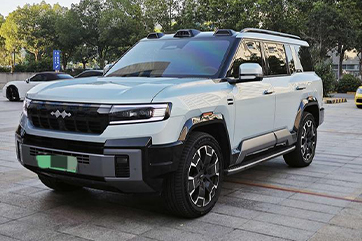
The 2026 BYD Leopard 8, also known as the Fangchengbao Bao 8 and marketed as the Denza B8 in selected overseas markets, is a large plug-in hybrid SUV built on the DMO (Dual Mode Off-road) Super Hybrid platform. Its powertrain combines a 2.0T turbocharged engine with front and rear electric motors. The Flash Charging Edition delivers a combined maximum output of approximately 550 kW and is equipped with a second-generation Blade Battery with a capacity of around 46.7 kWh. A non-load-bearing body structure, electronically controlled four-wheel drive, and the YunNian-P intelligent hydraulic body control system form the foundation of its off-road hardware.
The main highlights of the 2026 model include the introduction of the second-generation Blade Battery and FLASH charging technology, along with further upgrades to power delivery and intelligent features.
In terms of market positioning, the Leopard 8 is designed for drivers who need generous cabin space, strong combined power, and practical off-road capability. Compared with conventional fuel-powered off-road SUVs, its greater reliance on electric drive provides more immediate torque response at low speeds. Compared with large all-electric SUVs, its plug-in hybrid powertrain reduces dependence on continuous access to charging infrastructure.
The specifications discussed in this article primarily refer to the 2026 domestic-market Flash Charging Edition of the Leopard 8. The overseas Denza B8 may have different battery specifications, charging capabilities, and equipment depending on the market and model year.
2. DMO Super Hybrid Platform: How Do the Engine and Dual Motors Work Together?
The DMO Super Hybrid platform is one of the key features that distinguishes the Leopard 8 from conventional urban plug-in hybrid SUVs. Rather than simply combining a combustion engine with a battery, the platform is designed around off-road requirements, with an integrated approach to powertrain layout, chassis structure, and energy management.
The powertrain consists of a 2.0T turbocharged engine and front and rear electric motors. The engine produces a maximum output of approximately 180 kW, while the two motors perform different driving functions. The system delivers a combined maximum output of approximately 550 kW and peak torque of around 760 N·m. According to published manufacturer and vehicle specifications, acceleration from 0 to 100 km/h takes approximately 4.8 seconds.
One advantage of this configuration is the motors' ability to deliver torque quickly during take-off and low-speed driving. This helps reduce the response delay typically associated with combustion engines operating at low RPM. When climbing slopes, starting on sand, or driving over loose surfaces, the electric drive system can adjust power distribution according to the available traction at each wheel.
The combustion engine provides sustained power and can participate in driving or help replenish the battery under appropriate operating conditions. For long-distance journeys, the fuel-powered system helps compensate for the limitations of electric-only range, reducing the need to rely entirely on charging facilities along the route.
It is worth noting that the system's combined maximum output is not simply the sum of the engine's and motors' individual peak outputs. Actual power delivery is also affected by battery charge level, temperature, and vehicle control strategies.
3. Battery Capacity and Flash Charging: Charging Efficiency for a Large Plug-in Hybrid SUV
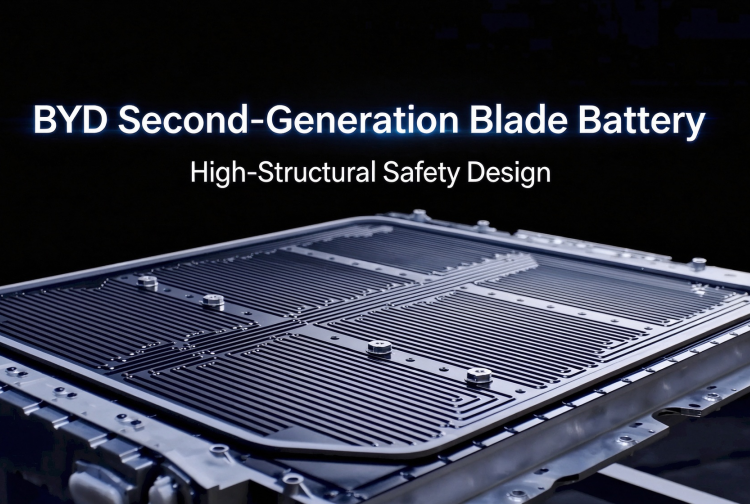
The battery system is one of the most significant technical upgrades in the 2026 model. The relevant Flash Charging version uses a second-generation Blade Battery with a capacity of approximately 46.7 kWh. Its integrated battery and chassis design also helps improve space utilization.
According to published vehicle specifications, the 2026 Leopard 8 Flash Charging Edition has a WLTC-rated electric range of approximately 150 km and a CLTC-rated combined driving range of around 1,380 km. The larger battery capacity extends its potential for everyday electric driving, while the engine and electric motors work together to support longer journeys. WLTC and CLTC are different testing standards, so their figures should not be directly compared. Real-world range also varies with temperature, speed, vehicle load, and driving conditions.
The more notable upgrade is the introduction of FLASH charging technology.
In March 2026, BYD announced its second-generation Blade Battery and FLASH charging technology. According to the manufacturer's published test results, when used with compatible FLASH charging equipment, the battery can charge from 10% to 70% in approximately 5 minutes and from 10% to 97% in approximately 9 minutes. Tests conducted in low-temperature environments also indicate improved charging performance under cold conditions.
These charging times are based on tests using compatible FLASH charging equipment. Actual charging speed depends on vehicle compatibility, battery temperature, initial state of charge, and charging infrastructure.
For overseas markets, the local DC charging network, connector standards, and communication protocol compatibility also need to be considered. Support for FLASH charging does not mean that conventional DC charging stations can deliver the same charging speed. The actual charging experience should therefore be evaluated against the infrastructure available in the destination market.
4. Four-wheel Drive and Off-road Capability: More Than Just High Power Output
The real off-road capability of a large SUV cannot be judged by engine power or acceleration figures alone. Chassis construction, suspension travel, ground clearance, approach and departure angles, and differential lock configuration all influence how the vehicle performs on challenging terrain.
The BYD Leopard 8 uses a non-load-bearing body structure, providing a chassis foundation designed for off-road use. Compared with unibody SUVs primarily developed for urban driving, this construction is better suited to handling complex loads placed on the vehicle body. It is particularly relevant for driving conditions involving gravel roads, muddy surfaces, and uneven terrain.
The vehicle is equipped with an intelligent four-wheel-drive system and traction recovery functions designed for challenging road conditions. Differential locks or related electronic control systems can improve torque distribution when the wheels have different levels of traction, helping the vehicle negotiate muddy terrain and cross-axle situations.
The 2026 Flash Charging Edition is equipped with the YunNian-P Ultra all-scenario intelligent hydraulic body control system. It can adjust body posture and suspension response according to vehicle status and road conditions. For a large SUV with considerable curb weight, this type of system can help improve body stability while balancing off-road capability and ride comfort on paved roads.
The vehicle measures 5,195 mm in length, 1,994 mm in width, and 1,905 mm in height, with a wheelbase of 2,920 mm. Official configuration information lists an approach angle of approximately 30°, a departure angle of approximately 29°, and minimum ground clearance of around 220 mm. These figures indicate the vehicle's geometric ability to handle slopes, ditches, and unpaved roads, although tire selection and vehicle load also influence practical off-road performance.
Key Dimensions and Off-road Specifications
| Parameter |
Reference Specification |
| Vehicle length |
5,195 mm |
| Wheelbase |
2,920 mm |
| Combined maximum power |
550 kW |
| Combined peak torque |
760 N·m |
| 0–100 km/h acceleration |
Approximately 4.8 seconds |
| Maximum wading depth |
Approximately 890 mm |
| Approach angle / Departure angle |
Approximately 30° / 29° |
Note: Specifications refer to the 2026 Flash Charging Edition.
It is important to understand that the maximum wading depth does not mean the vehicle can safely drive through water under all conditions. Water flow speed, the condition of the riverbed, vehicle load, and the condition of the vehicle's seals all affect wading safety. Drivers should follow the wading limits and instructions provided in the owner's manual.
5. BYD Leopard 8 Price: Market Positioning and Competitiveness Against Similar SUVs
The BYD Leopard 8 price is one of the main considerations for buyers researching this model. Its positioning reflects several factors, including the powertrain, battery capacity, chassis technology, driver assistance features, and overall vehicle class.
Following the launch of the 2026 Flash Charging Edition, the model received several technical upgrades and moved further into the premium new-energy off-road SUV segment. Compared with conventional fuel-powered off-road vehicles, its plug-in hybrid powertrain adds value through electric driving and energy management capabilities. Compared with ordinary mid-size and large plug-in hybrid SUVs, its non-load-bearing body, differential locks, and off-road-oriented suspension raise the level of hardware required.
According to launch information released in May 2026, the official list price of the BYD Leopard 8 Flash Charging Edition was RMB 419,800 for both the five-seat and seven-seat versions, while the six-seat version was priced at RMB 427,800. After launch incentives, the respective prices were RMB 409,800 and RMB 417,800. Specific promotional policies and eligibility conditions are subject to the information published by sales channels.
These prices are official domestic-market list prices and should not be treated as overseas export quotations. The final export price may also depend on vehicle configuration, procurement channels, transportation arrangements, insurance, and import duties and taxes in the destination market.
How the Leopard 8 Compares with Other Off-road SUVs
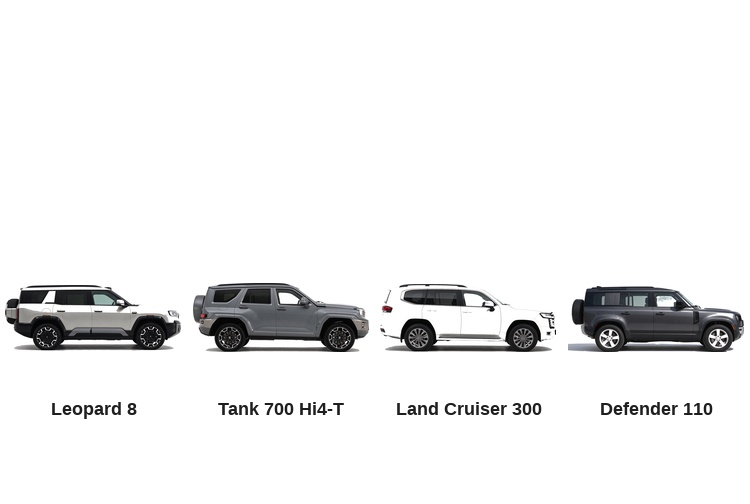
In overseas markets, the BYD Leopard 8 competes not only with other plug-in hybrid off-road SUVs but also with conventional off-road models that have established their market positions through proven mechanical four-wheel-drive systems and global after-sales networks. The Tank 700 Hi4-T, Toyota Land Cruiser 300, and Land Rover Defender 110 represent three different approaches to this segment.
| Model |
Powertrain and Four-wheel-drive System |
Considerations for Overseas Use |
Best Suited to |
| BYD Leopard 8 |
2.0T plug-in hybrid system, front and rear electric motors, electric four-wheel drive |
Strong combined power and electric assistance at low speeds. Local charging, repair, and spare parts support should be confirmed in advance. |
Drivers who prioritize power, cabin space, and new-energy features |
| Tank 700 Hi4-T |
3.0T plug-in hybrid system with the Hi4-T mechanical four-wheel-drive architecture |
Its large-displacement engine and mechanical four-wheel-drive layout are closer to those of conventional rugged off-road SUVs. Local dealer and parts availability should be checked by country. |
Drivers who prefer large-displacement engines and traditional off-road mechanical systems |
| Toyota Land Cruiser 300 |
Combustion engine and mechanical four-wheel-drive system |
Toyota has an established dealer and service presence in many countries and regions. Repair experience and parts channels may be easier to access in some markets. |
Drivers who prioritize long-term ownership, repair convenience, and local service availability |
| Land Rover Defender 110 |
Terrain Response system and permanent four-wheel drive |
Combines off-road capability, comfort, and premium positioning. Purchase costs can vary significantly depending on the version and optional equipment. |
Drivers who value brand positioning, comfort, and all-terrain driving capability |
The right choice depends on powertrain preferences, energy infrastructure, and long-term maintenance requirements.
In regions with limited charging facilities or repair resources, conventional fuel-powered off-road vehicles such as the Toyota Land Cruiser 300 may be worth prioritizing. Buyers with reliable access to charging who value combined power, electric four-wheel drive, and intelligent features may find the BYD Leopard 8 more appealing. Those who prefer large-displacement engines and traditional mechanical off-road systems can compare it with the Tank 700 Hi4-T. The Land Rover Defender 110 may be more suitable for buyers who place greater emphasis on brand positioning, comfort, and all-terrain driving experience.
Therefore, overseas vehicle selection should not be based solely on purchase price, maximum power, or off-road specifications. Local repair networks, spare parts availability, fuel quality, charging infrastructure, and long-term ownership costs should also be considered.
6. Intelligent Features and Cabin Space: Designed for Long-distance Travel and Everyday Use
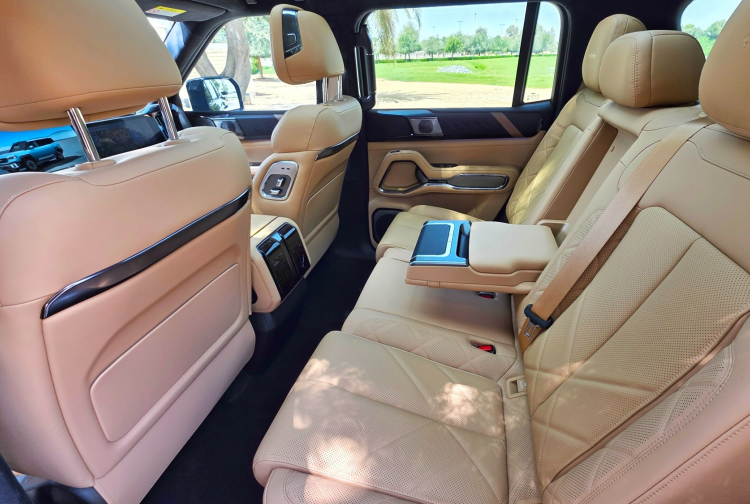
In addition to its powertrain and off-road hardware, cabin space and intelligent features are important competitive factors for a large SUV. The Leopard 8 is available with five-, six-, and seven-seat layouts, providing different options for passenger capacity and luggage requirements.
The domestic-market configuration of the 2026 Leopard 8 Flash Charging Edition comes standard with Huawei Qiankun Intelligent Driving ADS 4. For overseas use, buyers should consider the regional compatibility of the infotainment system, navigation maps, voice recognition, network connectivity, and online services. Language support, software licensing, and service coverage may differ between markets. The availability of individual functions, including smartphone connectivity and driver assistance features, should be confirmed for the intended destination.
7. What Should Overseas Buyers Consider Before Purchasing?
Operating conditions vary considerably across markets. High temperatures, sandy terrain, and long-distance highway driving in the Middle East; low winter temperatures, mountain roads, and snow-covered surfaces in Central Asia; and unpaved roads in parts of Africa all place different demands on the powertrain, tires, suspension, and battery management system.
The 2026 BYD Leopard 8 offers strong combined power and off-road hardware. However, whether it is suitable for a particular market still depends on local operating conditions.
Operating Conditions and Configuration Checks in Different Markets
| Target Market and Operating Conditions |
Main Considerations |
What to Check Before Purchase |
| Middle East: High temperatures, sandy terrain, and long-distance highway driving |
Battery and engine cooling, air-conditioning load, tire heat resistance, and underbody protection |
Check the cooling system and air-conditioning performance, confirm tire specifications and load ratings, verify whether underbody protection is installed, and understand the maintenance requirements after driving on sand |
| Central Asia: Low winter temperatures, mountain roads, and snow-covered surfaces |
Cold starts, battery thermal management, winter driving range, and tire traction |
Confirm battery preheating functions and operating conditions, check low-temperature charging limitations and winter tire compatibility, and understand the vehicle's actual range in cold weather |
| Parts of Africa: Gravel roads, muddy terrain, and long-distance unpaved driving |
Tire impact resistance, underbody protection, suspension condition, and repair accessibility |
Check tire specifications, spare tire configuration, underbody protection, and ground clearance. Also investigate the availability of commonly used parts and the local repair sector's ability to service high-voltage systems |
Local operating conditions also affect energy costs and maintenance requirements. In areas with limited charging infrastructure, the plug-in hybrid system can reduce dependence on public charging networks, although the proportion of electric driving will still depend on charging availability.
Fuel compatibility should also be confirmed in advance. The official specifications for the Leopard 8 Flash Charging Edition list 92-octane gasoline or higher. Buyers should check how this requirement corresponds to the fuel grading system used in the destination country.
For vehicles used regularly in remote areas, particular attention should be paid to access to high-voltage system diagnostics and repairs, the availability of commonly required spare parts, and the technical capabilities of local maintenance personnel. These factors can directly affect long-term maintenance costs and ownership convenience.
Key Checks Before Overseas Purchase
Before confirming a vehicle purchase, buyers should pay attention to the following points:
- Vehicle configuration and export specifications: Domestic-market versions may not have exactly the same specifications as the actual export vehicle. Use the VIN, vehicle configuration sheet, and delivery documents to verify the engine, battery capacity, seating layout, charging connector, driver assistance system, and optional equipment.
- Charging and energy conditions: Confirm whether compatible DC charging equipment is available in the destination market. Also check the required fuel grade and routine maintenance requirements.
- After-sales service and spare parts: Investigate the availability of repairs for the traction battery, electric motors, suspension, and high-voltage electrical systems, as well as the supply channels for model-specific parts.
- Transportation and import requirements: Verify export documentation, destination-market certification standards, import duties and taxes, and international shipping arrangements.
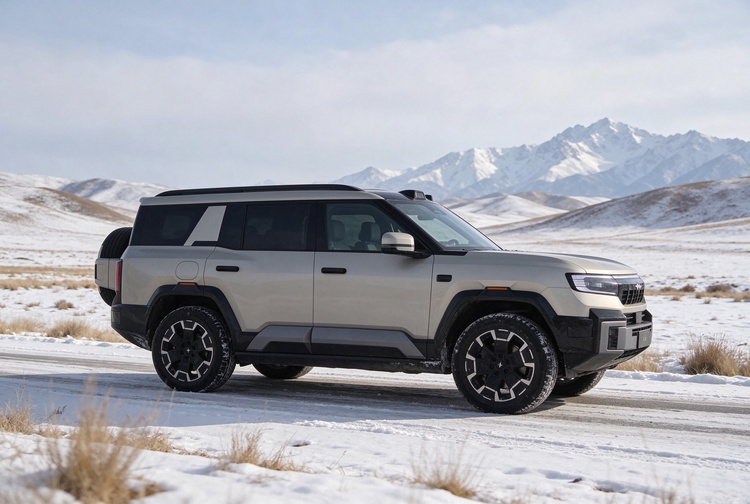
8. Conclusion: A Plug-in Hybrid SUV Combining Flash Charging and Off-road Capability
The 2026 BYD Leopard 8 Flash Charging Edition combines a plug-in hybrid powertrain, dual-motor electric four-wheel drive, a 46.7 kWh second-generation Blade Battery, and the YunNian-P Ultra suspension system. Its key strengths lie in its combined power output, electric driving capability, and off-road-oriented chassis design.
For buyers considering the 2026 BYD Leopard 8 for overseas markets, checking the vehicle configuration, export specifications, and destination requirements is an important step before purchase. Geneeev provides vehicle export support, including specification confirmation, vehicle condition information, export quotations, and shipping arrangements
. Buyers can contact the team to learn more about available vehicle options and export details.
FAQ: Frequently Asked Questions About the BYD Leopard 8
Q1: What is the 2026 BYD Leopard 8?
The 2026 BYD Leopard 8, also known as the Fangchengbao Bao 8, is a large plug-in hybrid off-road SUV built on the DMO platform. It is marketed as the Denza B8 in selected overseas markets.
Q2: Is the Denza B8 the same vehicle as the BYD Leopard 8?
Yes. The Denza B8 is the overseas-market version of the Fangchengbao Bao 8, also known as the BYD Leopard 8. The branding, equipment, and specifications may differ depending on the destination market.
Q3: What is the electric range of the 2026 BYD Leopard 8?
The 2026 Flash Charging Edition has a WLTC-rated electric range of approximately 150 km and a CLTC-rated combined driving range of approximately 1,380 km.
Q4: How long does it take to charge the BYD Leopard 8?
Under compatible FLASH charging conditions, the second-generation Blade Battery can charge from 10% to 97% in approximately 9 minutes. Actual vehicle charging performance depends on equipment compatibility and operating conditions.
Q5: What is the fuel consumption of the BYD Leopard 8 when the battery is depleted?
The published WLTC fuel consumption at minimum state of charge is approximately 8.45 L/100 km.
Q6: How does the BYD Leopard 8 compare with the Toyota Land Cruiser 300?
The Leopard 8 uses a plug-in hybrid powertrain with dual electric motors and electric four-wheel drive, while the Land Cruiser 300 primarily uses a conventional combustion-engine powertrain with a mechanical four-wheel-drive system.
Q7: How much does the 2026 BYD Leopard 8 cost?
The official starting price of the 2026 BYD Leopard 8 Flash Charging Edition is RMB 419,800 for the five-seat and seven-seat versions and RMB 427,800 for the six-seat version. Overseas export prices vary depending on vehicle configuration, shipping, insurance, and destination-market taxes.