
Toyota's "Global Model Reliability Report," released in 2024, adds solid proof to the legend of the "indestructible Corolla": its average global lifespan has reached an impressive 12.3 years, far surpassing the 9.8 years of the Volkswagen Lavida and the 10.5 years of the Nissan Sylphy in the same class. Domestically in China, the 2024 annual statistics from the third-party automotive data platform "Che300" offer even more valuable reference points: Corollas over 10 years old account for 28.7% of those still on the road. Among them, the proportion of vehicles still running normally after 15 years exceeds 11.2%, and 2.3% of owners have driven their beloved cars over 300,000 kilometers.
However, behind these glowing figures lie many "short-lived" cases. In the first half of 2024, the number of Corollas requiring major engine overhauls due to improper maintenance surged by 18% year-on-year. Some owners spent 28,000 RMB on repairs after driving only 60,000 kilometers because they never changed the transmission fluid; others ignored body rust protection, leading to chassis perforation after just 10 years (3.7% of cases).
Combining the latest official 2024 data with the real-world experiences of five high-mileage owners, this article deeply decodes the core secrets affecting the Corolla's lifespan. From the durability differences between the 1.2T turbo and 1.8L hybrid models, to clarifying the traditional "oil change every 5,000 km" myth, to six field-tested tips for extending vehicle life, and even how to accurately judge the remaining life of a used Corolla through maintenance records. Whether you are a new Corolla owner or a buyer planning to hunt for a used one, this practical content based on real cases will help you truly turn the "indestructible Corolla" into an "unbreakable family heirloom."
.jpg)
1. Official "Design Service Life": Not a Ceiling, but a Durability Baseline
In 2024, Toyota China's Technical Department officially released the "Design Service Life" standard for the Corolla based on complex domestic road conditions: 15 years/300,000 kilometers. It is important to clarify that "Design Service Life" does not mean the vehicle must be scrapped after 15 years. Rather, it means that under normal maintenance, the probability of major failures in core components (engine, transmission, chassis) within 15 years is less than 3%. Comparing mainstream models in the same class: the VW Lavida's design life is 12 years/250,000 km, and the Nissan Sylphy's is 13 years/280,000 km. The Corolla's inherent advantage in "longevity genes" is obvious.
A more telling indicator of durability is "Residual Value Life." 2024 automotive residual value data shows that the residual value rate of a 10-year-old Corolla remains at 32.6%, while the Lavida is only 25.1% and the Sylphy 27.8%. This means a 10-year-old Corolla is not only a stable daily driver but can also be sold for a respectable price, confirming its excellent durability from a market perspective.
2. Extreme Operations by Chinese Owners: 380,000 km in 18 Years, 260,000 km in 5 Years Without Major Overhaul
Beyond the data, the real-world stories of ordinary owners are even more persuasive. We collected the experiences of five high-mileage Corolla owners, three of whom have particularly typical stories:
Mr. Wang from Beijing: Purchased a first-generation domestic Corolla 1.8L Manual GL in 2006. It has been in use for 18 years, covering 380,000 kilometers, and is still used as a daily family car. Talking about his habits, Mr. Wang summed it up simply: "Change oil every 5,000 km, air filter every 20,000 km, and transmission fluid every 60,000 km without fail—never delay." In the summer of 2024, his car completed its 76th routine service. The 4S shop technician evaluated it thoroughly: "Engine cylinder pressure is normal, gear shifting is smooth; as long as the maintenance rhythm is kept, driving another 3 years is no problem." Looking back at 18 years of ownership, Mr. Wang's Corolla only underwent two non-maintenance repairs: replacing the AC compressor in 2022 (1,200 RMB) and a chassis rust-proofing touch-up in 2023 (800 RMB).
Ms. Li from Guangzhou: Owner of a 2016 1.6L Automatic Corolla. The car is mainly used for city commuting, averaging 50 km daily, and has traveled 120,000 km without any major overhauls. She shared a valuable detail: "In the winter of 2023, the car had trouble cold starting. The 4S shop said the battery was aging and needed replacement, but I tested the voltage with a multimeter myself and found it was just poor contact due to oxidized battery terminals. After cleaning them, the battery worked normally for another year." To date, aside from routine maintenance, Ms. Li has only replaced tires twice and brake pads once, with total repair costs under 3,000 RMB.
Master Zhang, Freight Driver: Owner of a 2019 1.2T Corolla. Due to engaging in short-haul freight, the vehicle averages over 50,000 km annually, totaling 260,000 km in 5 years. "Many people say turbo engines aren't as durable as naturally aspirated ones, but my 1.2T Corolla hasn't had a single issue," Master Zhang shared. "The core secret is not slacking on maintenance; I use fully synthetic oil every time, and the turbocharger is still running normally." However, he also revealed a pitfall he encountered: "In the 3rd year, because I didn't change the spark plugs in time, idle jittering occurred. I finally spent 600 RMB to replace them with 4 original spark plugs to solve it."
1. 1.2T Turbo vs. 1.8L Hybrid: Where is the Lifespan Gap?
Toyota's 2024 reliability data shows that the average lifespan of the 1.8L Hybrid Corolla is 1.2 years longer than the 1.2T Turbo version. The core difference lies in two areas:
Engine Structural Differences: The 1.8L naturally aspirated engine (Code 2ZR-FE) lacks complex auxiliary components like turbochargers and intercoolers. Its structure is simpler, and its failure rate is 27% lower than the 1.2T turbo engine (Code 9NR-FTS). Statistics from a third-party repair platform in 2024 show that after 100,000 km, the probability of a turbocharger gasket leak in the 1.2T model is 8.3%; whereas for the 1.8L NA engine, the probability of a cylinder head leak after 150,000 km is only 2.1%.
Core Component Repair Costs & Lifespan: The hybrid Corolla's Ni-MH battery is the part owners worry about most, but 2024 data shows the average lifespan of the hybrid battery reaches 9.8 years, far exceeding the manufacturer's 8-year/200,000 km warranty. A Guangzhou owner of a 2015 Hybrid Corolla only replaced the battery after 9 years, spending 12,000 RMB for a non-original battery (original is 25,000 RMB). In contrast, the average repair cost for a turbocharger on a contemporary 1.2T model is 18,000 RMB, which is actually higher than the hybrid battery replacement cost.
2. Maintenance "Pitfalls" Hurt More Than Driving: 3 Common Myths in 2024
According to 2024 Corolla failure statistics, 62% of faults are caused by improper maintenance. Three misconceptions are most typical:
Myth 1: Must change oil every 5,000 km. In 2024, Toyota officially updated the Corolla maintenance manual: if fully synthetic oil (5W-30 spec) is used, the interval can be extended to 10,000 km/6 months. A senior technician at a Beijing Toyota 4S shop revealed: "Many owners still insist on 5,000 km changes. Actually, the oil hasn't even reached its optimal lubrication state yet—it's sheer waste. But there are extreme cases where owners wait 15,000 km, leading to oil degradation and reduced lubrication, directly increasing engine wear."
Myth 2: Transmission fluid is "lifetime" and never needs changing. This is the deadliest myth! 2024 data shows that cases of transmission overhauls caused by failure to change fluid account for 34% of total failures. According to Toyota, manual transmission fluid needs changing every 60,000 km, and CVT fluid (including Hybrids) every 80,000 km. A Shenzhen CVT owner never changed the fluid in 120,000 km, resulting in transmission slippage. The repair cost was 28,000 RMB, equivalent to 1/5 of the car's current market value.
Myth 3: Ignoring "Small Maintenance" details. Seemingly insignificant parts like air filters, cabin filters, and spark plugs directly affect lifespan. 2024 data shows that Corollas with long-neglected air filters see a 30% increase in intake resistance and a 5% rise in fuel consumption, accelerating valve carbon buildup. Furthermore, failing to replace spark plugs after 100,000 km causes ignition delay; strictly speaking, severe cases lead to increased cylinder carbon, directly shortening engine life.
3. Usage Scenarios Have Huge Impact: City vs. Highway Lifespan Differs by 3 Years
The impact of different usage scenarios on Corolla lifespan exceeds expectations. 2024 data indicates a 3-year gap in average lifespan between city commuting and long-distance highway driving:
City Commute Scenario (Avg. 50 km/day, mostly congested): Frequent stop-and-go accelerates engine carbon buildup, and frequent shifting increases internal wear on the CVT. Data shows the average lifespan in this scenario is 11.5 years, 2.5 years less than highway scenarios. It is recommended that city commuters clean the throttle body every 20,000 km to effectively reduce carbon deposits.
Highway Scenario (Avg. >10,000 km/year on highways): Stable engine conditions, low carbon generation, and low transmission load result in less vehicle wear. A Beijing owner who frequently drives highways has accumulated 320,000 km in 10 years. Testing showed engine cylinder pressure remained above 90% of the factory standard, 15% higher than city-driven Corollas of the same age.
.jpg)
In the "Compact Sedan Lifespan Report" released by "Che300" in 2024, the core data comparison between the Corolla, Lavida, and Sylphy is stark, clearly highlighting the Corolla's longevity advantage:
| Evaluation indicators | Toyota Corolla | Volkswagen Lavida | Nissan Sylphy |
|---|---|---|---|
| Average service life (years) | 12.3 | 9.8 | 10.5 |
| Percentage of vehicles in use that are 15 years old | 11.20% | 3.70% | 5.90% |
| Percentage of vehicles with over 300,000 kilometers | 2.30% | 0.80% | 1.10% |
| Probability of major failure after 100,000 kilometers | 4.20% | 9.50% | 7.80% |
Deeper analysis reveals the key differences are concentrated in three core components:
Engine Durability: The failure rate of the Corolla's 1.8L NA engine is 40% lower than the Lavida's 1.4T engine and 25% lower than the Sylphy's 1.6L NA engine. The core reason is that the Corolla's valve timing system uses a chain drive, which is maintenance-free for life; whereas some Lavida and Sylphy models use belt drives, requiring replacement every 60,000-80,000 km. Failure to replace the belt can lead to snapping and severe engine damage.
Chassis Rust Protection: The Corolla chassis uses double-sided galvanized steel sheets for superior rust resistance. 2024 field data shows that the average rust area on the chassis of a 10-year-old Corolla is only 5%, compared to 12% for the Lavida and 9% for the Sylphy. Chassis corrosion is a major factor affecting vehicle life, and this is one of the key reasons the Corolla can maintain stable driving for so long.
Transmission Reliability: The Corolla's CVT uses Toyota's self-developed K313 model. While the shift logic is conservative, it is extremely durable, with a failure rate of only 2.1% per 100,000 km. The 7-speed dry dual-clutch transmission in the Lavida has a failure rate of 12.3% per 100,000 km, ranking high in faults for its class; the Sylphy's CVT, while generally durable, has a lower torque limit and is prone to failure under long-term full loads or aggressive driving.
.jpg)
Combining the experiences of five high-mileage owners and the 2024 official maintenance guide, we have summarized six field-tested tips to extend lifespan that are simple and cost-effective:
Choose the Right Oil, Not the Most Expensive: Reject cheap mineral oil, but fully synthetic isn't always "the more expensive, the better." Corolla 1.2T models need 5W-30 Fully Synthetic Oil (API SN grade or higher). 1.8L NA/Hybrid models can use 5W-30 Semi-Synthetic or Fully Synthetic. Mr. Wang from Beijing shares: "I've driven this car for 18 years, always using Toyota genuine 5W-30 semi-synthetic, changing it every 10,000 km, and never had an oil-related engine failure." Do not use high-viscosity oils like 0W-40, which increase engine resistance and accelerate internal wear.
Change Transmission Fluid on Time: 60,000 km for Manual, 80,000 km for CVT. Must use genuine oil. Toyota CVTs have extremely high requirements for fluid performance; third-party oils can cause jerky shifts or valve body blockages. Ms. Li from Guangzhou once used cheap third-party CVT fluid, causing low-speed jerking, and eventually spent 800 RMB to switch back to genuine fluid to fix it. Manual transmission owners can use third-party brands meeting Toyota WS standards but should prioritize known brands like Shell or Mobil.
Chassis Rust Protection is Essential: Mandatory for cold regions; every 2 years for others. Northern China uses road salt in winter, corroding chassis; the South is humid/rainy, accelerating rust. Truck driver Master Zhang’s method is worth emulating: "I did chassis armor (approx. 600 RMB) right after buying the car. I check the chassis every 2 years and touch up any rust spots. My car has done 260,000 km in 5 years, and the chassis has no perforations."
No Hard Acceleration on Cold Starts: Idle for 30 seconds, accelerate only after water temp rises. Especially in winter, engine speed shouldn't exceed 2000 RPM until the water temperature reaches 60°C (gauge needle in the middle). Mr. Wang says: "I idle for 30 seconds after starting in winter, then drive slowly until the temp is up. I've done this for 18 years, and the engine has never had abnormal noise or shakes."
Avoid Driving on an Empty Tank: The fuel pump relies on gasoline for cooling; low fuel causes burnout. The Corolla tank is 50L; refuel when below 1/4. 2024 statistics show 70% of fuel pump failures are due to driving with the fuel light on—the pump overheats without enough gas to cool it. Replacement costs about 1,500 RMB.
Regularly Check Wear Parts: Don't wait for failure; pre-emptive replacement saves money. Focus on three parts: Brake Pads (replace if <3mm; original life approx. 60-80k km) to avoid damaging discs; Battery (replace if voltage <12.4V; life approx. 3-5 years) to avoid being stranded; Tires (replace if tread <1.6mm or over 5 years old), as aged tires significantly increase blowout risk.
.jpg)
In 2024, used Corolla transaction volume increased by 22%, making it a hot model in the compact used sedan market. However, many buyers fall for "odometer rollback" or "accident cars." Based on third-party inspection data, here are three ways to quickly judge a used Corolla's remaining life:
Check Maintenance Records: Focus on "Key Component" replacement times. Use platforms like "Che300" or "ChaBoshi" to input the VIN. Check three core records:
Has transmission fluid been changed on schedule (CVT 80k km, MT 60k km)? If not, failure risk is high.
Any engine overhaul records (cylinder head, piston, crankshaft replacements)? If yes, lifespan is significantly reduced.
Has the hybrid battery been replaced? If the car is over 8 years old and the battery hasn't been changed, buy with caution due to high replacement costs.
Look for Chassis Rust: Focus on 3 core areas. Lift the car and check:
Lower Control Arms: Look for large rust patches or abnormal welds (signs of accident repair).
Fuel Tank: Check for dents, deformation, or rust holes (replacement costs ~800 RMB).
Door Sills: Lift the weather stripping at the bottom of the door to check for internal rust. Rust here likely indicates long-term waterlogging or lack of rust protection.
Test Drive Feel: Judge engine status via 3 details.
Cold Start: Is the idle stable (normal is 700-800 RPM)? Any noise or shaking?
Acceleration: Does the 1.2T accelerate smoothly without increased turbo lag (lag indicates turbo aging)?
Shifting: Is the CVT smooth? Obvious jerking may indicate valve body failure (expensive to fix).
.jpg)
"The Corolla that can't be broken" has never been an empty slogan, but an inevitable result built on reasonable maintenance and correct usage. The Corollas in 2024 that have lasted 15 years and run 300,000 kilometers are backed by owners' persistence in "timely oil changes and regular checks" and the careful care of "waiting for warm-ups and keeping the tank filled." In reality, there are no "naturally long-lived" cars, only "mindful" owners. If you can practice the maintenance tips and usage habits in this article, your Corolla can transform from a standard "commuter car" into a "family heirloom" that accompanies you for 15, 20, or even more years.
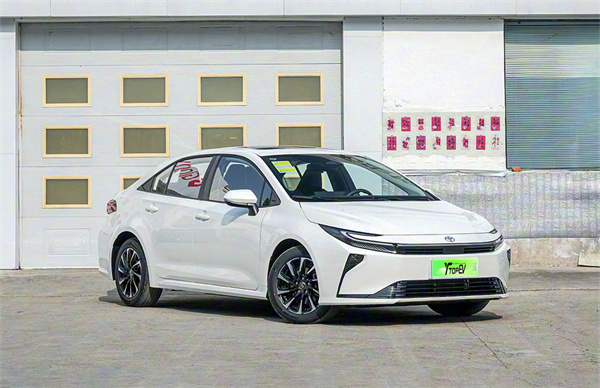
Now, the brand new 2026 Toyota Corolla has officially launched! (As shown in the figure above.) With a refreshed exterior, comprehensively upgraded interior texture, and optimized chassis tuning, it delivers an even more comfortable driving experience. We not only have this hardcore maintenance guide to help you extend your car's life, but also a large inventory of Toyota Corolla for sale!
Want to be the first to know the 2026 Toyota Corolla price, trim levels, or inquire about current stock? Contact us immediately. Our professional team will provide one-on-one answers to help you easily acquire your dream car and start an "unbreakable" driving journey!
A: This is the core prerequisite for extending the Corolla's life. The official Toyota maintenance manual specifies maintenance items for different mileages, such as changing CVT fluid at 80,000 km and spark plugs at 100,000 km. 2024 failure data shows that for Corollas maintained strictly according to the manual, the probability of major failure after 100,000 km is only 4.2%, whereas for vehicles not maintained on schedule, the failure probability skyrockets to over 28%.
A: The 2026 Corolla continues the reliability advantages of the old model in core components while optimizing chassis tuning and powertrain efficiency. The thermal efficiency of the new 1.8L hybrid engine has increased to 41%, and the transmission logic is smoother. These upgrades not only do not compromise durability but also reduce component wear during daily use, further extending vehicle life.
A: The Corolla's body dimensions (Length x Width x Height approx. 4635 x 1780 x 1455 mm, Wheelbase 2700 mm) balance family commuting and short-haul cargo needs. The moderate size makes the vehicle agile for city driving, while the trunk volume satisfies daily cargo needs. Like Master Zhang mentioned in the article, running short-haul freight with a Corolla relies on its reasonable spatial design, and these dimensions do not add burden to the chassis, helping maintain long-term durability.
A: The combined fuel consumption of the gasoline version is about 5.5-6.0 L/100km, and the hybrid version is as low as 4.0 L/100km. The corresponding mpg performance is at a leading level in its class. Lower fuel consumption means higher engine combustion efficiency and slower carbon buildup rates, which effectively reduces internal engine wear in the long run, directly helping to extend life.
A: Gallons per mile and mpg (miles per gallon) are inverse relationships. The conversion formula is: gallons per mile = 1 ÷ mpg. In daily driving, avoiding hard acceleration and hard braking, and maintaining a steady speed can keep fuel consumption in a reasonable range, reducing frequent high-load engine operation, thereby lowering component wear.
A: Corolla factory rims are mostly 15-16 inches. It is recommended to choose rims consistent with factory specifications to avoid increasing suspension load with oversized modifications. Daily maintenance requires regular cleaning of mud and sand from rim gaps and checking bolt tightness to prevent chassis component uneven stress caused by rim deformation or looseness, which can trigger suspension and steering system failures.
A: The maintenance cycle for the 2026 Corolla is basically consistent with the old model; under fully synthetic oil conditions, it remains one service every 10,000 km / 6 months. Whether new or old, strictly following the official maintenance manual is key to avoiding major repairs and extending life. Do not ignore maintenance details just because the vehicle has been upgraded.
A: It will have an impact. If the size, ET value, or center bore of non-original rims do not match the factory specs, it will change the vehicle's track width and suspension geometry. This leads to decreased stability during driving and accelerates wear on tires and suspension components, shortening chassis service life. It is recommended to prioritize original rims or big-brand rims that meet factory specifications.
A: The impact is very significant. A clogged air filter leads to insufficient intake air, increasing fuel consumption by 5%-10%; aging spark plugs cause reduced ignition efficiency, increasing fuel consumption by about 8%. Timely replacement of air filters, spark plugs, oil, and other parts can keep the engine in optimal condition, maintaining ideal mpg performance while protecting the engine.
A: Closely related. The 2026 Corolla Hybrid has upgraded its Ni-MH battery management system, increasing battery cycle life by 10% compared to the old model. Official data shows an average lifespan of over 10 years. The new battery's charging and discharging logic is smarter, reducing damage from deep discharge and further extending the overall service life of the hybrid system.
A: The Corolla's wheelbase and seat design provide good comfort for long-distance passengers, making it suitable for long drives. Before a long trip, check tire pressure, brake systems, and coolant levels. During the drive, rest every 2-3 hours to let the engine and transmission cool down, avoiding component overheating and wear caused by prolonged continuous operation.
A: When buying a used Corolla, ask the seller to provide maintenance records. Compare them against the official maintenance manual to see if key items like transmission fluid, engine oil, and spark plugs were changed on schedule. If records show long-term failure to follow the manual, even if the vehicle mileage is low, there may be hidden faults, and it is recommended to purchase with caution.
.jpg)
.jpg)
.jpg)
.jpg)
.jpg)
.jpg)


