
In this comparison, we selected the Xiaomi YU7 and the Tesla Model Y, two of the most popular pure electric SUVs on the market today. Instead of relying on tedious data stacking or subjective and one-sided judgments, we focus entirely on four core dimensions: daily driving experience, cabin experience, charging experience, and space performance. Through real-world usage scenarios, we break down the differentiated advantages of these two models to help users with different needs accurately find the travel companion that best suits them.
In terms of the most essential driving experience, the Xiaomi YU7 and the Tesla Model Y demonstrate completely different tuning philosophies, precisely catering to different driving preferences. The Xiaomi YU7 prioritizes comfort. Its power delivery is tuned to be smooth and linear. Even when pressing the accelerator deeply, the sense of acceleration is not overly abrupt, offering a driving feel closer to that of a traditional gasoline vehicle. Particularly noteworthy is its exclusive anti-motion-sickness mode, which effectively reduces the dragging sensation caused by regenerative braking. After releasing the accelerator pedal, the vehicle can coast naturally with inertia. For new drivers transitioning from fuel vehicles to electric vehicles, it can be described as a “friendly transitional model.” The steering resistance adjusts intelligently according to vehicle speed: light and agile at low speeds, and slightly heavier at high speeds, ensuring flexibility for city commuting while maintaining stability on highways. The suspension tuning leans toward softness, effectively filtering out vibrations when passing over speed bumps and rough roads, preventing obvious jolts for passengers. The only drawback is that body roll is relatively noticeable when cornering, making it more suitable for daily urban commuting and family travel scenarios.
.jpg)
.jpg)
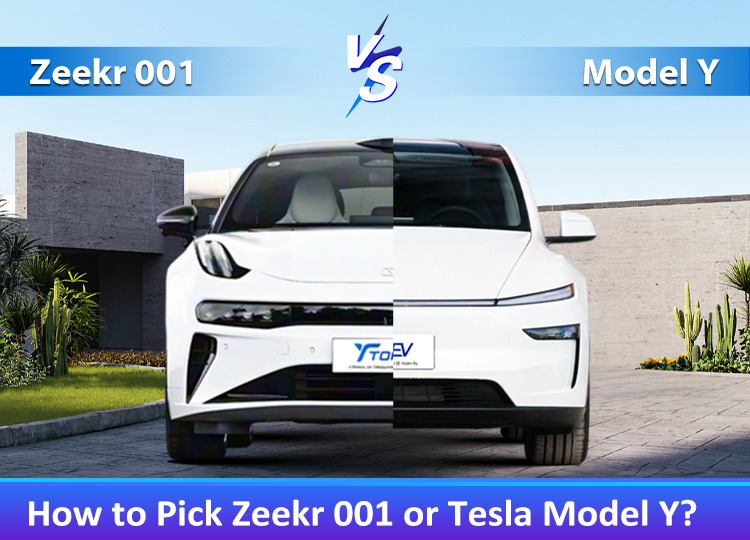
In contrast, the Tesla Model Y is tuned throughout for sportiness and agility. The steering resistance is generally heavier, delivering a solid sense of control from the moment you start driving. During quick lane changes, the vehicle follows steering inputs precisely, with accurate steering and minimal free play, providing strong driving confidence whether in daily commuting or spirited driving. The power response is direct and rapid; even a light press on the accelerator provides ample power output. The acceleration is clearly felt but not violently abrupt, making it easy to handle urban traffic and highway overtaking. The chassis tuning is relatively firm, offering clear road feedback and allowing the driver to accurately perceive subtle changes in the road surface. Body roll is well controlled when cornering. However, bumps are more noticeable when driving over rough roads or speed bumps, reflecting a certain trade-off in comfort. It is better suited for users who value handling precision and driving enjoyment.
.jpg)
.jpg)
Regarding cabin experience, the two models show particularly distinct differences in design philosophy and perceived quality, following two different approaches: “refined comfort” and “minimalist practicality.” The Xiaomi YU7 emphasizes a refined and comfortable interior style, with large areas covered in soft-touch materials. Some versions also feature a suede headliner, offering a delicate and warm texture. In addition, the control of new-car odors is excellent, allowing occupants to use the vehicle comfortably without prolonged ventilation after delivery. The interior adopts a multi-screen layout, balancing technological appeal and practicality. The operation logic is simple and intuitive, highly aligned with smartphone usage habits, making it very easy to learn. It also supports integration with the Xiaomi ecosystem: simply approaching the vehicle with a Xiaomi smartphone enables seamless unlocking, and users can remotely control Xiaomi smart home devices through the vehicle system. Voice recognition supports multi-zone activation, allowing rear passengers to independently adjust the air conditioning and switch music without relying on the driver. The seats are softly cushioned yet well supported. Some versions are equipped with zero-gravity mode and seat massage functions, reducing fatigue during long journeys. Combined with acoustic glass and active noise cancellation, the cabin effectively isolates wind and road noise once the doors are closed, delivering an excellent level of quietness and a superior riding experience.
.jpg)
.jpg)
The Tesla Model Y adopts a highly recognizable minimalist cabin design. The entire interior is equipped with only a central touchscreen, and all physical buttons are removed. Gear shifting, air conditioning adjustment, and navigation are all operated through the screen, which may require some time for existing users to adapt and for new users to explore gradually. Interior materials focus on practicality, with soft-touch materials mainly used in frequently contacted areas, while other parts use harder materials. Although this makes the interior easy to maintain and less prone to fingerprints, the sense of refinement is slightly weaker compared to the Xiaomi YU7. In terms of smart features, Tesla’s infotainment system runs smoothly without lag, and OTA updates are frequent, continuously optimizing system functions and driver-assistance performance. Its driver-assistance stability is widely recognized. However, it does not support multi-brand ecosystem integration, which limits its compatibility. Voice recognition is only available for the driver’s area, so rear passengers must rely on the driver to adjust the air conditioning or change music, making it less convenient than the Xiaomi YU7. The seats only offer heating and ventilation, without massage functionality. Cabin quietness is moderate; slight wind and tire noise may enter the cabin at high speeds, slightly affecting ride comfort.
.jpg)
.jpg)
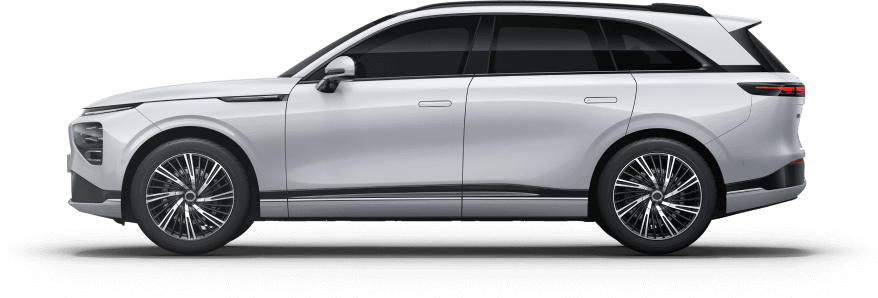
In terms of space and cargo experience, the two models focus on different needs, corresponding to “family travel” and “flexible practicality.” The Xiaomi YU7 has larger body dimensions and offers a very spacious interior, with especially generous rear legroom. Even with three adults seated in the back, it does not feel crowded. The flat floor design ensures that the middle passenger’s comfort is not compromised, making it very friendly for families with multiple children. The trunk’s standard capacity fully meets daily needs, and together with an independent front trunk, storage space is abundant. It is convenient for storing personal items, shopping bags, and camping equipment. The rear seats can be folded down to expand cargo capacity further, easily accommodating large items. Additionally, the cabin features multiple well-designed storage compartments in areas such as the door panels, beneath the center console, and the armrest box, highlighting practicality in the details. Overall, it is more suitable for families with multiple children or users who frequently require large cargo capacity.
.jpg)
.jpg)
Although the Tesla Model Y is slightly smaller in overall dimensions than the Xiaomi YU7, it offers excellent space utilization. Rear legroom and headroom are sufficient for daily use, and even with all seats occupied, it does not feel cramped. It is fully adequate for daily commuting and short family trips. The trunk’s standard capacity is considerable, and folding down the rear seats significantly expands the cargo area, making it easy to handle moving, camping, or transporting large items. The only drawback is the absence of an independent front trunk, resulting in slightly less storage flexibility compared to the Xiaomi YU7. Interior storage space is relatively simple, mainly consisting of the storage compartment beneath the center console and door pockets, which are sufficient for daily personal items. Overall, its space performance leans more toward flexible practicality, suitable for users with moderate space requirements who prioritize mobility and flexibility.
.jpg)
.jpg)
In terms of charging experience, both models can easily meet the needs of daily commuting and short trips, but each has its own strengths in convenience and scenario adaptability. The Xiaomi YU7 offers impressive fast-charging performance. A short break of around ten to fifteen minutes during daily commuting can provide enough power for the entire day, without long waiting times. Some versions also support vehicle-to-load (V2L) functionality, allowing users to power appliances such as hot pots, smartphones, and cameras while camping. The charging process is simple and user-friendly, compatible with most public charging stations on the market, eliminating the need to search for dedicated stations. Daily charging is highly convenient. The core advantage of the Tesla Model Y lies in the reliability of its driving range and the completeness of its charging network. The displayed range closely matches real-world performance, reducing the need for frequent charging and effectively alleviating range anxiety. Its exclusive Supercharger network has extensive coverage, making it easy to find charging stations both in cities and along highways. This is especially advantageous for long-distance travel, as it reduces waiting time for charging. The charging operation process is smooth and straightforward, requiring no complicated steps.
Overall, the Xiaomi YU7 and the Tesla Model Y are two mainstream pure electric SUVs with distinct styles and unique advantages, each accurately matching different users’ core mobility needs. Their differences mainly lie in driving tuning, cabin quality, ecosystem integration, and space details. There is no absolute superiority—only suitability. If you prefer a comfortable driving experience, value practicality for family travel, and are a Xiaomi ecosystem user, then the Xiaomi YU7 will be the more appropriate choice. If you pursue solid handling quality, prioritize charging convenience and driver-assistance stability, and appreciate a minimalist cabin design, then the Tesla Model Y will better meet your needs. We hope this real-world comparison helps you make the most suitable car purchase decision.
Q: What is the biggest difference in driving tuning between Xiaomi YU7 and Tesla Model Y?
A: The core difference lies in their tuning philosophy: Xiaomi YU7 leans toward comfort, with smooth and linear power delivery. Its motion-sickness reduction mode softens the drag sensation caused by regenerative braking. The suspension is tuned for softer vibration filtering, making it well-suited for urban commuting and family use. In contrast, Tesla Model Y emphasizes sportiness and agility, featuring heavier steering feel, precise handling, quick throttle response, and a firmer chassis with clearer road feedback—ideal for drivers who prefer dynamic control.
Q: When switching from a gasoline car to an EV and worrying about adaptation, which is easier to get used to, Xiaomi YU7 or Model Y?
A: Xiaomi YU7 is more recommended. For drivers transitioning from gasoline vehicles to EVs, its power delivery feels closer to that of traditional fuel cars, with gentle and non-abrupt acceleration. Its exclusive motion-sickness mode effectively reduces the drag from regenerative braking, allowing the car to coast more naturally when lifting off the accelerator, significantly lowering the adaptation threshold. Tesla Model Y, on the other hand, has more direct power response and a driving style that differs more noticeably from gasoline cars, requiring some time to adapt.
Q: Is there a big difference in cabin quality between the two models? What are their respective characteristics?
A: The difference is quite significant, as the two models follow completely different design approaches. Xiaomi YU7 focuses on refined comfort, featuring extensive soft-touch materials, with some versions offering a suede headliner. It also performs well in controlling new-car odors. The multi-screen layout enhances operational convenience and supports integration with the Xiaomi ecosystem. Tesla Model Y adopts a minimalist design, equipped with only a single central touchscreen and no physical buttons. Interior materials are primarily practical, with a higher proportion of hard plastics. While the sense of luxury is slightly weaker, it is easy to maintain and the infotainment system runs smoothly and reliably.
Q: What practical functions does Xiaomi YU7’s Xiaomi ecosystem integration offer?
A: Key practical functions include: proximity-based automatic unlocking when a Xiaomi smartphone approaches the vehicle, eliminating the need for manual operation; remote control of Xiaomi smart home appliances through the vehicle system, enabling car-home connectivity; and multi-zone voice recognition, allowing rear passengers to independently adjust the air conditioning or switch music without relying on the driver.
Q: How does Tesla Model Y perform in terms of driver assistance and voice control?
A: In terms of driver assistance, the system benefits from frequent OTA updates and demonstrates strong functional stability, providing a solid assistance experience for daily commuting and highway driving. However, voice control is limited to the driver’s area. Rear passengers cannot independently adjust the air conditioning or switch music and must rely on the driver, making it less convenient than Xiaomi YU7.
Q: For families with multiple children, which model offers more usable space for daily use?
A: For multi-child families, Xiaomi YU7 is more spacious and better suited. It has a larger body size, generous rear legroom, and can comfortably accommodate three adults in the back without crowding. The flat rear floor enhances middle passenger comfort. The trunk’s standard capacity meets everyday needs, complemented by a separate front trunk for additional storage. With the rear seats folded down, it can accommodate large items. Combined with multiple thoughtfully designed storage compartments, it fully meets the loading and seating needs of larger families.
Q: Since Tesla Model Y is slightly smaller than Xiaomi YU7, will it feel cramped in daily use?
A: Not at all. Although Tesla Model Y has slightly smaller exterior dimensions than Xiaomi YU7, its space utilization is highly efficient. Rear legroom and headroom are sufficient for daily commuting and short family trips. Even with full occupancy, it does not feel obviously cramped. The trunk capacity is considerable, and folding down the rear seats expands the space significantly, sufficient for moving or camping scenarios. The only drawback is the absence of a separate front trunk, making storage flexibility slightly less versatile compared to Xiaomi YU7.
Q: Both models have their own advantages in charging experience. Which scenarios are they best suited for?
A: Each model’s charging experience is tailored to different travel scenarios. Xiaomi YU7 is more suitable for daily commuting and short camping trips. It features impressive fast-charging capability, allowing drivers to replenish enough energy during short breaks. Some versions also support external power discharge, enabling activities such as cooking hotpot or charging appliances while camping. It is compatible with most public charging stations, making charging highly convenient. Tesla Model Y is more suitable for long-distance intercity travel. Its real-world driving range closely matches the displayed range, reducing the need for frequent charging. Additionally, its dedicated Supercharger network is widely available, effectively minimizing waiting time during long trips, with a smooth and convenient charging process.
Q: Is there a big gap in ride comfort between Xiaomi YU7 and Tesla Model Y?
A: The difference is quite noticeable, with Xiaomi YU7 offering superior comfort. Its seats are softly cushioned and support zero-gravity positioning and massage functions, reducing fatigue during long journeys. The vehicle is equipped with acoustic glass throughout and active noise cancellation, effectively isolating wind and road noise for excellent cabin quietness. Tesla Model Y seats support only heating and ventilation, without a massage function. Cabin quietness is average, with slight wind and tire noise noticeable at highway speeds.
Q: Without considering budget, how should one choose between the two models based on personal needs?
A: If budget is not a concern, the choice should depend on individual needs. If you prefer comfortable driving, prioritize family practicality, and are a Xiaomi ecosystem user, Xiaomi YU7 is the better option. If you pursue solid handling dynamics, value long-distance charging convenience and driver-assistance stability, and appreciate a minimalist cabin design, Tesla Model Y will better match your preferences. Neither model is absolutely superior; the key differences lie in driving tuning, cabin quality, ecosystem integration, and spatial details.
.jpg)
.jpg)
.jpg)
.jpg)
.jpg)
.jpg)


