1Last month, I had a phone call with a dealership friend in Johannesburg. He said something that stayed with me:
“What I’m most afraid of is not failing to sell EVs — it’s selling a BEV, and then the customer’s house keeps losing power. Eventually they come back angry at me.”
It sounds blunt, but it captures the core contradiction in South Africa’s new energy vehicle market today.
In Q1 2026, South Africa’s NEV market saw a surprising but logical shift: plug-in hybrids (PHEVs) massively outpaced battery electric vehicles (BEVs) in growth.
According to South African automotive association naamsa (May report), combined with transaction data from Cars.co.za and Lightstone:
BEVs still grew strongly — around 80% is impressive in any market — but PHEVs growing more than four times faster clearly signals a shift in consumer preference.
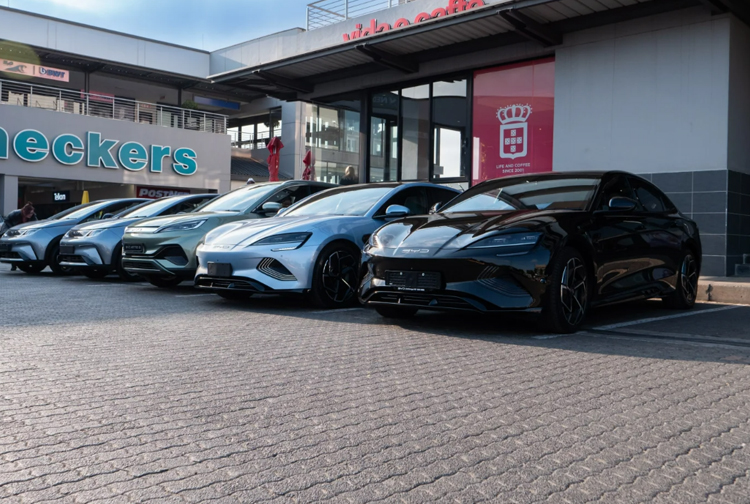
Among the top 5 NEVs in Q1, PHEVs dominated 4 positions:
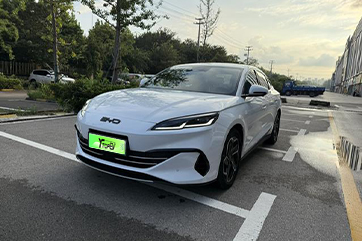
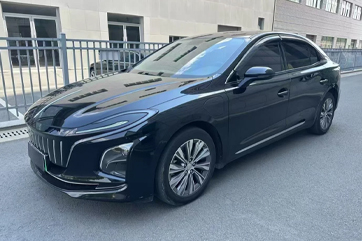
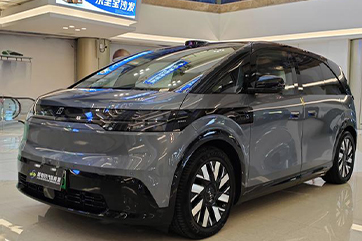
Three Chinese brands entered the top rankings, all competing strongly in the 550,000–800,000 rand segment, which is the core middle-class vehicle replacement budget.
Previously, buyers in this range mainly considered Toyota RAV4 or Honda CR-V. Now, more consumers are shifting toward Chinese plug-in hybrids.
Only one BEV (the Dolphin) made the top list.
This does not mean BEVs are weak — it simply shows that, at this stage, many South African buyers are voting for “electric vehicles that can also refuel.”
The 430% growth is not just a low base effect. Several structural factors are driving this shift.
South Africa’s Eskom power crisis is well known. From late 2025 into early 2026, rolling blackouts (Stage 3–Stage 6) continue.
For BEV owners, the issue is not charging convenience — it is whether electricity is available at all when needed.
Some households with solar + storage systems are fine, but that requires significant additional investment.
PHEVs solve this directly:
South Africa has only 400–500 DC fast chargers, mostly in Gauteng and Western Cape.
By contrast:
BEVs work well in Johannesburg or Cape Town, but South African driving habits are not limited to city commuting. People travel long distances — Durban, Kruger Park, weekend road trips — and in these scenarios, charging anxiety is real.
Lightstone data shows owners in the 550k–800k rand segment drive around:
Typical usage pattern:
This dual-mode usage fits South African middle-class behavior extremely well.
In Q1 2026, inland petrol prices are around:
Fuel is expensive, so consumers want electric driving for daily use.
However, unlike Europe:
So PHEVs provide a practical balance:
electric for daily use + fuel for flexibility
BEVs still grew around 80% YoY — strong performance.
However, compared to PHEVs, they are growing more slowly due to:
Industry consensus suggests South Africa is currently in a “pragmatic electrification phase.”
This is not a rejection of BEVs — it is a timing issue.
As infrastructure improves, BEVs will likely dominate. But in 2026, South Africa is still in transition.
The market direction is already visible:
Avoid only “fuel saving” narratives.
Instead emphasize:
“dual-energy freedom”
This addresses real customer concerns, not just technical specs.
One sentence summarizes South Africa’s NEV market in Q1 2026:
Consumers are not rejecting new energy vehicles — they are choosing the version that fits current reality.
PHEVs are not replacing BEVs; they are acting as a pragmatic bridge technology until infrastructure and grid stability catch up.
Data sources: naamsa May 2026 sales report, Cars.co.za NEV analysis, Lightstone vehicle transaction data (2025–2026), ChargePointSA infrastructure report
.jpg)
.jpg)