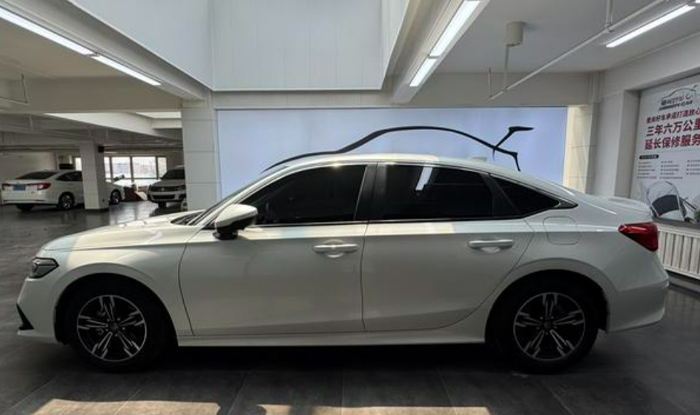
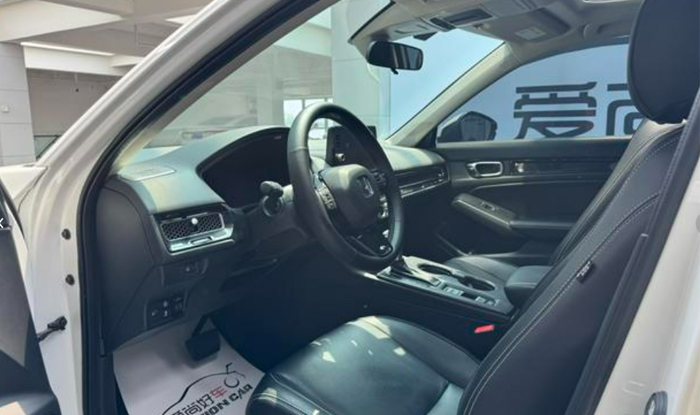
In Guangzhou’s 2026 used car market, the 2019 and 2020 Honda Civic models are widely considered the best-value years of the 10th-generation Civic lineup.
The reasons are straightforward:
In Guangzhou, mainstream transaction prices currently range from approximately RMB 85,000 to RMB 120,000.
Compared with similarly equipped 2017 models, pricing is more stable. Compared with the newer 11th-generation Civic, purchase pressure is significantly lower. As a result, the 2019-2020 models have become the most actively traded years in the 2026 used Civic market.
Based on observations from several Guangzhou used car dealers, the 2019-2020 Civic has already become one of the fastest-moving used sporty sedans in the RMB 100,000 price segment.
Consumers are now actively avoiding early production batches associated with oil dilution problems.
Especially within the RMB 80,000-120,000 budget range, the later 10th-generation models currently enjoy the strongest market acceptance.
As discounts on new cars continue expanding, used 11th-generation Civic prices have gradually softened.
However, depreciation is still not fully released, meaning used prices remain relatively high. As a result, many buyers are returning to late-model 10th-generation Civics instead.
Although these earlier models are cheaper, the market has become increasingly cautious about early oil dilution batches.
Vehicles without complete maintenance records, frequently used for short-distance commuting, or with irregular oil changes are now facing significantly stronger price negotiations.
The core reason is not simply low price.
These years happen to sit at a very unique balance point:
“Lower failure rates + stable depreciation + mature features.”
The biggest controversy surrounding early 10th-generation Civics was the 1.5T engine oil dilution issue.
After 2019, Honda optimized:
Market feedback shows that the 2019-2020 models experience significantly fewer oil dilution complaints compared with early 2016-2017 versions.
The first three years are usually when new cars depreciate the fastest.
By 2026, 2019 Civics have already entered a relatively stable pricing stage.
Buying a 2019 model today generally means future resale losses will be far less severe than buying a newer vehicle.
Mainstream used Civics currently fall within:
At this stage:
This is often considered the ideal used-car buying stage.
| Year | Advantages | Risks | Recommendation |
| 2016 | Lowest price | High oil dilution risk, early production issues, high modification rate, aggressive previous owners | Only suitable for experienced buyers |
| 2017 | Partial improvements began | Must check production date, not registration date | Late-2017 production batches are acceptable |
| 2018 | Feature upgrades (larger screen, Honda Connect, some Honda SENSING) | Some early risks remain | Post-July 2018 production is a reasonable budget option |
| 2019-2020 | Lower risk, mature features, stable pricing | Not yet at high-repair age | Currently considered the best-balanced option with strong resale liquidity |
Focus on late-2017 production vehicles.
Main goal:
Avoid problematic cars.
Pay close attention to:
A mid-to-high trim 2019 Civic is currently the sweet spot.
Advantages:
A high-spec 2020 Civic — ideally with Honda SENSING — is highly recommended.
It offers:
Suitable for buyers who value both features and driving feel.
A few months in production timing can make a huge difference in risk level.
Always prioritize production date.
The 1.5T engine is highly sensitive to:
Incomplete service history increases long-term risk significantly.
Some modified Civics are restored to factory appearance before resale.
Common hidden modifications include:
Even after restoration, drivetrain and chassis wear may remain.
In Guangzhou, flood history inspection is extremely important.
Electronic systems and CVT transmissions are highly sensitive to water damage.
Yes — especially the 2019-2020 models.
They currently offer the best balance among:
These models are particularly suitable for buyers who enjoy sporty driving dynamics and have a budget between RMB 80,000 and RMB 120,000.
However, if your priority is maximum reliability, lower maintenance costs, and simple daily transportation, vehicles like the Toyota Corolla or Toyota Levin may still be safer long-term choices.
If the price difference is within RMB 5,000, prioritize the 2020 model.
It offers:
If the price gap exceeds RMB 10,000, the 2019 model usually offers better overall value.
Core principle:
For the same budget, lower mileage is generally more important.
Mid-cycle facelift models produced after July 2018 received noticeable upgrades, including:
With complete maintenance history, these can still be reasonable lower-budget alternatives close in value to 2019 models.
The 2019-2020 models are currently the dominant inventory in the market.
Most dealers now actively screen out early high-risk oil dilution batches.
Vehicles on sale typically include:
The price is attractive, but oil dilution risks and potential repair costs are much higher.
These vehicles are generally only suitable for buyers with:
First-time buyers are usually better off avoiding them.
Highest-risk vehicles include:
They target different buyers.
With proper maintenance, failure rates remain below 5% even around 100,000 km.
The key is replacing genuine CVT fluid every 40,000-60,000 km.
During test drives, check for:
.jpg)

.jpg)